
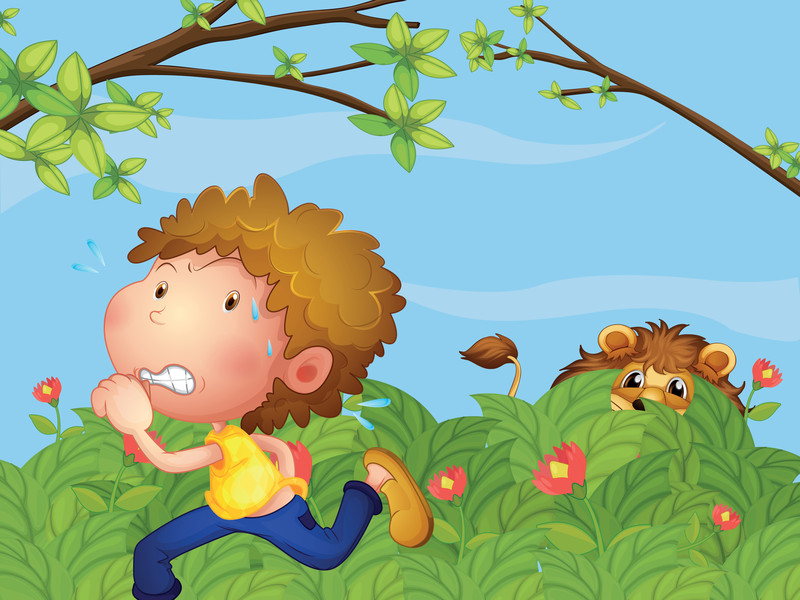
 Our adrenal glands are situated above our kidneys. They secrete hormones to give us extra energy when we find ourselves in a dangerous situation. In other words, the fight or flight response.
Why Things Go Wrong When Things Start to Go Right
by Ros Kitson
11 11, 2014 | Posted in Uncategorized | 0 comments
I've spoken to people who, when their lives take a turn for the better after a period of stress, suddenly find they start to struggle rather than finding that things become easier. I'm talking about fears, barriers that come up, unpleasant feelings, all happening when things start to improve.
So, why does this happen and what is going on?
Well, when we've been struggling with whatever challenge we've been facing, whether it caused stress or made you feel unsafe, we start to put up our barriers. If we feel we need protection, we will do this to the exclusion of everything else. Issues that we faced along the way may not have been processed, but instead filed away until we were in a better place emotionally to deal with them.
When things start to go right in our lives, we relax. We no longer need to be on red alert all the time. We finally feel safer and we start to open up.
And guess what? All that stuff we buried when we weren't feeling so great comes up. As human beings, we have an innate draw towards healing ourselves, so as soon as it's safe to do so, this instinct takes over.
However, because we're often not versed in the ways of emotional healing, we can find this a bit overwhelming. When unresolved issues come up, they don't have a flag attached saying "emotional residue from that time when I felt hurt by my ex" or similar. Oh no. We just get an unpleasant feeling. We may feel upset, we may feel angry, or any other emotion might come up.
The most logical assumption is that the present situation is causing you to feel that emotion. This will either cause internal conflict as you try to work out why you're crying when your current situation is so great or you will find problems in your current situation to match the emotions, where there really aren't any.
The good news is that these things have come up because we're feeling safe enough to deal with them. So, if you are experiencing this, life is probably going well for you and you are in a place where you feel supported.
It is, however, important to process these issues and let them go in order to move forwards with our lives. We don't need to understand them, but often a memory of where they came from will also surface which might give us some clarity we need. Then once we've let them go, we're free to carry on enjoying the good times that life has brought us.
Grief is probably something that most of us have had to experience at some point in our lives. The most common and well-know reason is the death of a loved one, but we grieve to some extent for other reasons as well. We grieve for any kind of loss, be it the end of a relationship, the loss of a friendship or even a change in situation.
Some of these events may only require a small amount of grieving; others may need a grieving process that lasts years. I grieved for the sale of my old car - a classic mini that I'd got myself far too emotionally attached to for my own good. I grieved for about an hour after the buyer took her away, and then I was able to move on with no regrets. However when I grieved for my aunt, who died when I was 19, the whole process lasted about 10 years.
There's no procedure for grieving and there's no formula to follow. No-one can tell you how long it will take, or what form it will take. It's not linear and it's not rational. However it is very necessary.
Grief is the process that takes you from the painful state you find yourself in at the point of loss, to acceptance of the situation and an ability to let go and move on. I think the most useful thing to know about grief is that it comes in cycles. You think you're coping really well and then something comes along to knock you sideways - again.
Often we fall straight into the grieving process. If our sorrow is strong and we are comfortable with our emotions, we will naturally start to go through the stages. However, often we block it and this is where we get stuck.
I've heard many people say they just can't cry. Sometimes we can't connect with our emotions as they are too painful so we block them away. Other times, there is a fear that if we break down, we'll never stop crying, so we prevent ourselves from even starting. Maybe we think we need to be strong for someone else - a child or a partner. This might be a necessary protection for the initial intensity of the emotion, but if we don't go back and address it, then we can't let go.
Letting go doesn't mean we are forgetting. Sometimes we don't want to grieve because we don't want to let the memory of a loved one go. But if we have such a highly charged emotional response to them that we can't even think about them, then are we really remembering them in a way they or we'd want.
Going back to my aunt, who was the first person I had to grieve for, I went through a lot of emotions. For years, I believed I could have done something to prevent it, which was hugely unlikely and probably quite arrogant about my influence as a teenager. For years I blamed those around her for not being able to help her. But that is also unfair. Eventually I came to accept that it was just a tragedy and a belief formed that she is probably happier now she's in the spirit world.
The thing that shows I've reached acceptance, is that I can remember the good times we had with happiness and joy. I can remember what she was like with love. I can remember my relationship with her without regrets.
The process was far from straight forwards. After the initial shock of losing her, my days ran pretty normally. Sometimes I'd think about things when my mind was quiet, but because I didn't see her day to day, my routines weren't affected. What I noticed was that every so often waves of emotion would come up and hit me and I'd find myself crying again. Over the 10 years after her death, these happened less frequently and less intensely. Each time they happened my thoughts and feelings processed a bit more and I began to make some sense of my loss.
If we don't grieve for whatever reason, we become stuck emotionally at the point the person died. We have to keep carrying the pain around with us and this can cause us to close up to prevent the emotions accidentally spilling out. Often people may "expect" us to have gotten over the loss by a certain point, so then we can feel it's even more necessary to hide the unresolved grief away. Grief can include many emotions, such as anger, regret, self-pity and others. If we don't complete the grief process, we won't have resolved all the individual emotions.
As you probably already realise from reading my other blog posts, if we have unresolved emotions, then we will likely be reacting to present events rather than making conscious choices. Imagine if you still had unresolved anger within you, you could well find it bursts out when you least expect it. If you are living with unresolved regret, you may find that you are living in the past a lot.
There are many ways to resolve these emotions, but the main one is to intend to grieve. Intention is a great starting point and often just allowing process to follow is enough. We may find we attract supportive people who we can talk to, or maybe we meet someone else who's gone through a similar experience. Even if there is no-one around who we feel understands us, a supportive hug can still help us along our journey. Nothing anyone says or does will make the pain disappear overnight, but it's important to keep the process moving forwards.
So, if you know there is a person or event you haven't grieved for, please consider going through this process to set yourself free and allow yourself to remember the positive memories without pain.
Boundaries and Their Effect on our Health
by Ros Kitson
10 21, 2014 | Posted in Uncategorized | 4 comments
 Boundaries are an interesting subject. Some people hold their boundaries very tightly and others are too loose with theirs. I believe the best way is to hold them firmly but with some flexibility. If boundaries are too tight or too loose, then we can end up with health problems.
Imagine your boundaries are too loose. You let anyone take advantage of your good nature. You find it hard to say no to people. You allow people to turn up at your house unannounced whenever they feel like it. You get cornered at parties by people you don’t really want an extended conversation with. You put up with unreasonable behaviour from people because you don’t want to risk conflict. I could find many other examples.
Now imagine your boundaries are too tight. You don’t do anything if it hasn't been in the diary at least a week. You don’t let anyone in emotionally. You are rigid about not giving anything away for fear of being taken advantage of. You find it hard to form relationships with people and can appear withdrawn or aloof.
Boundaries can be physical, emotional or behavioural. And your boundaries might not be the same strength in each of these areas. For example, you may be very friendly but hate hugging someone. Or you might be emotionally withdrawn, but will offer to help people to the extent that you have no time left for yourself.
Now, we are usually born with no boundaries. We have yet to learn about them and so as a baby, we will generally be quite happy being passed around from person to person for a hug. Babies are generally very trusting, hence why they rely on responsible adults to keep them safe.
As we get older, we develop boundaries through experience and learning. Our parents will teach us not to talk to strangers. They may well tell us not to give away everything we own because they're not going to buy us a whole lot of new stuff.
However, we also develop boundaries from our own life experiences. We may find that we are taken advantage of for being too generous. We may find that we get hurt if we're too open. We may find that we feel uncomfortable when strangers give us a hug.
And so we start to bring our boundaries in to such a level as to keep us feeling safe. This is an important part of development and necessary for our wellbeing.
However we also learn from our friends and from society as a whole. Some of these things may be helpful, for example, our friends feel loved when we give them a hug. But some of them may be more destructive, for example if we think we need to be promiscuous to be cool.
What's healthy is different for different people, but usually it consists of only giving as much as you freely want to with no conditions.
Now, if we are giving too much, ie our boundaries are too loose, then our energy is likely to become depleted. The end result of this is chronic fatigue. I've worked with people who have lost their spark, they've lost their enthusiasm for life and they don't have motivation for even the fun stuff.
However, if we wall ourselves off from the world, only letting people in with a signed invitation in triplicate, then our hearts become closed and this will not only cause us to become isolated, but can also eventually lead to health problems. We are naturally sociable beings, so if we're closing up and going against our nature, there is probably some kind of trauma or stress underlying it.
It's hard to change our level of boundaries. We may feel guilty about tightening up boundaries that were too loose. We may feel that we're becoming a bad person for not giving as much of ourselves as we did before and this might be difficult to adjust to. However, as long as you are firm about where you stand, people will usually respect you for being clear about things. The trouble comes when people who are used to the "old" you, struggle with adapting to the "new" you. But this is their problem. The important ones will work it out.
It's also quite hard to open up and loosen tight boundaries. This can feel quite vulnerable and can feel quite risky. However, no-one is suggesting you have to open up in one go. It might be easier to take little steps and test the response you get at each stage. And it may be that it's not appropriate to open up the same amount with everyone.
Again, as with many of my other blogs, I will say that it's perfectly possible to do this adjustment by yourself, but if you're finding it difficult, then a therapist can often be of help. It's not necessary in today's society to struggle alone.
So I hope this gives you some food for thought about boundaries and the effect of not setting them at a healthy level.

This blog post is featured on Ruby McGuire's Linky Party.
 I went to a funeral last Friday. Fortunately for me, it wasn't someone I was close to, but it touched me deeply and I was acutely aware of how much the family and close friends must be suffering to lose someone they loved in such a tragic way. The woman, who wasn't much older than myself, committed suicide after a battle with bi-polar disorder.
As I said, I didn't know her well, and therefore wouldn't presume to talk about her case and her suffering, but it does raise the issue in general about how people suffer with these conditions and how often they, sadly, don't find the help they need to deal with them and embrace their lives again.
As well as the sadness and grief I felt today, I also felt anger. I felt the tragedy that, in today's society, people still aren't aware enough of these issues to be able to help those that suffer. But I realise that a part of the problem with mental illness is that it's very difficult to understand what someone is going through unless you've gone through a similar situation yourself.
How can you know how someone can reach the point where they wish to take their own life if you've never felt that low? How can you understand the bleakness that overtakes everything? How can you even begin to imagine how someone who is well loved would think that their family would be better off without them? How can you believe that every bit of hope has gone from them, that they don't believe things will ever get better?
Luckily for me in my story, I never lost hope, even if at times it was only a small glimmer. The vicar at the funeral today read out a quote from Anne Frank -"Where there's hope, there's life". And I truly believe that hope is what keeps people alive when they are in the depths of their suffering.
But as well as hope there needs to be professional support. I know that the help I provide isn't mainstream, and I would never profess to be able to cure people of anything. However myself and other such health professionals can provide help to ease the emotional suffering people go through. Kinesiology and homeopathy helped me when I was going through my depression and I wouldn't be where I am today without them.
I have no issue with people who prefer to go down the mainstream route of medication but, please know that if whatever you are doing isn't working, whether mainstream or alternative, there are other options. There are many therapies and treatments out there. If one therapist isn't helping, try another one. If one modality doesn't resonate with you, please try a different one. If what was helping, stops helping, it may be time to change to something else. Whatever happens, please don't suffer alone and please don't ever lose hope.
I know what I went through with my own depression. I know the emotional pain I suffered. I remember countless times when I phoned my homeopath in hysteria, not knowing what to do with myself. I remember the times I’d lie in my bed in unbearable emotional agony, not being able to find any relief.
Back then, I didn't feel I could talk about any of this. At the time I felt that I was probably over-reacting, or I was being weak and crap. Because I never received a proper diagnosis of my condition, I often questioned whether I actually had one.
So I did the opposite, I tried to hide it. I tried to present a positive, together front for the world. I tried to be OK. And because I lived alone and I was OK for a lot of the time, it worked pretty well. I expect very few people, know what I went through.
I still find it hard to talk about this now, but this isn't about me. I’m sure many people have gone through what I went through and suffered alone too. This is about encouraging people to get help. This is about encouraging people not to give up when things seem so bleak you can't see the light at the end of the tunnel. This is about trying to prevent the suffering people go through when one person feels they have no alternative but to give up.
So please, if you or anyone you know is suffering from emotional pain of any kind, please seek help and know that you don't have to go through this alone.
This is a term I use to explain what we do when we make connections that end up limiting us in our lives. Often these connections come from a stressful situation. Eg if someone harshly takes the piss out of me when I tell a joke, then I might learn that it is never safe to tell jokes. Whereas there might be times when it isn't safe, or a good idea to tell them, it's hardly true that it is never safe. Hence the title of this blog 2+2=5. We over connect and come up with conclusions that aren't really true. We would normally know that these things aren't linked. However when we are either very young, or we encounter a situation that stresses us, we react from a different part of our brain and we can easily make these links. We do this to protect ourselves. It comes from the flight or fight response. If, back in stone age times, we saw someone attacked by a wild animal, then when we see that type of animal again, we run before it gets near us. We learn that the wild animal will harm us and that knowledge keeps us safe. Nowadays, we don't usually encounter dangers of this type, but we've retained the mechanism for making connections. I often treat clients who seem to think they shouldn't have made these connections, as it somehow means they weren't being very smart, but actually the opposite is true. The more intelligent we are, the better we are at making connections, and the more likely we are to make these kind of connections when under extreme stress. The good news is that all these connections can be taken apart at a any stage when they are no longer serving us - either with the help of a therapist, or just with good self-awareness.
Projection – What Picture Are We Creating?
by Ros Kitson
04 18, 2014 | Posted in Uncategorized | 3 comments
I have been motivated to write about this by some comments on a Facebook status. So often I find these discussions that show up really interesting food for thought. The post started off with the following picture:
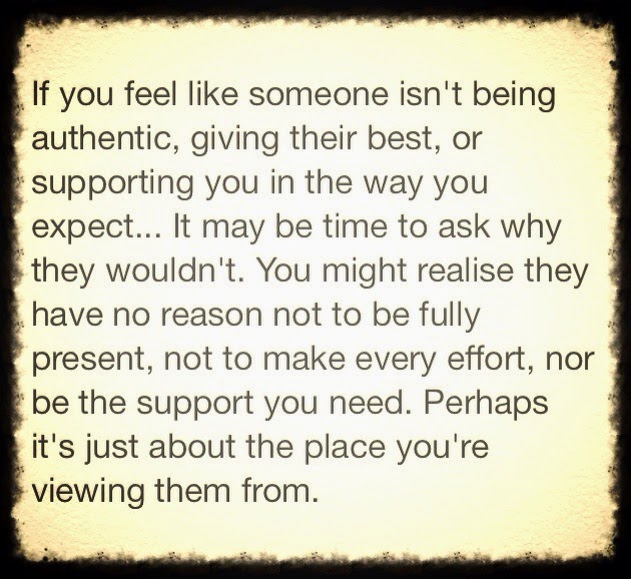
 This article was prompted by a recent communication with a friend, who declared that she couldn't be happy because of various things that had happened to her. I think many of us have at some point felt the same - that happiness is an end product, a result you gain when your life is perfect, when you have enough money, when you find that perfect partner. The list goes on.
However, I'd like to dispute that. Happiness is a choice we make every day. And once we've achieved happiness, then often the other things follow.
The key is to take charge of our emotions, rather than letting them take charge of us. Often we feel extremely justified as to how we feel. We can explain in great detail why we feel the way we do. However, does this serve us?
For example, my friend had many regrets; things she wished were different about her past, but these were things which she can't change now. And yet, she held these things responsible for her unhappiness. Now, if she could make the choice to let these thing go and decide to be happy in spite of them, she would have a better quality of life.
I used to react to everything negative, but nowadays I'm far more in control of how I respond. For example, last night I got a power cut. I calmly lit my candles and finished up before going to bed, hoping it would be back in the morning. It wasn't, and I also found that my shed was damaged and needed urgent repairs to make it waterproof before I headed off to work.
Now, in the past, I would have stressed and ranted and felt that the world was extremely unfair to put this kind of burden on me - and just before Christmas too. And then I would probably have worried about how long the power would stay off and the impact on the food in my fridge and freezer. These unwanted thoughts would have gone round and round my head, preventing me from doing anything else useful.
Today, I've just taken it in my stride. There's absolutely nothing I can practically do to fix the power. If food goes off, then it will have to be chucked out, but luckily I'm not hosting Christmas, or I'd have rung round some friends to make other arrangements. And I've decamped to work, where I have warmth, light and broadband. I'm very happy here.
So generally in life, I invite you to decide which choices you really wish to make. Do you really want to respond negatively to a situation? Do you really want to respond argumentatively to someone who's pressing your buttons? Do you really want to hold on to the wrongs done to you in the past?
Or would you rather choose to be happy?
I was thinking the other day about the pressure we put on ourselves to be perfect. It was triggered by 2 friends who are taking on new voluntary roles. The first was apologising in advance for possibly messing up. I don't think anyone who knows him thinks he'll mess up, but that was quite a big concern of his. I then was thinking, in contrast, of another friend who reminds us that she is still learning her role and will not be perfect yet. And then she does the best that she can. I used to be a perfectionist. I hold my hands up to this. I'd be proud of the quality of my work. I'd love to hear compliments about it. However, the flip-side was that I'd take ages to get anything finished and I'd often procrastinate if I wasn't sure it would be perfect enough, so sometimes the task wouldn't get done at all. And I'd carry around this ever growing list of things to do, which put extra stress on me. Now I'm not advocating that we don't do our best, but our best will vary according to not only our ability, but also our current level of experience, how we're feeling that day, and what other pressures we have going on in our lives. There are times when perfection is relevant - if you are a surgeon or operating dangerous machinery, for example. However how I design my business cards really isn't one of them; it's more like a journey, each version can be a little bit different as I evolve my ideas and experience. It's also good to think of where we'd be if, as babies, we didn't risk failure in learning to walk and talk. How would it be if we looked at the baby next to us who was more developed in these skills and decided it wasn't worth us bothering as we couldn't do it right now. It seems a ridiculous notion, but many people do exactly this as adults. So, don't let the fear of perceived failure, put extra pressure on you, or stop you doing something. Be honest with people as to your experience and do the best you can.
 So December has arrived for its annual visit and the shops are full of festive cheer. I've heard that people have started decorating their homes, although I leave mine a bit later than this, due to the fact that my Christmas tree is so large it takes up too much space for it to be there too long.
Now, I love the festive season. I love the build up, the parties, the choosing presents for my loved ones, the singing of carols, and finally spending Christmas itself with my family. But I realise from talking to other people that not everyone is so lucky. So I thought I'd address this here and offer some help.
Christmas is a very significant time of the year. Whether we like it or not, we're sold a fairy tale annually by the retail community. As much as we may try to ignore it, it's very difficult not to compare your experience with this. If, for whatever reason, your past Christmases weren't brilliant, you may have a sinking feeling each year.
If you are now the one responsible for "getting Christmas together", you may feel a lot of pressure to make it perfect for all your guests, which can leave you tired and time-starved before it even arrives.
If you are unfortunate to have had a sad occasion happen at a previous Christmas, the arrival of each year can trigger unresolved grief.
If you used to have great Christmases, but your situation has now changed and you've lost these, this annual holiday can bring up unresolved feelings of regret.
And finally, if you're unfortunate to have to spend Christmas with people in whose company you wouldn't normally choose to spend time, you may end up with conflict and maybe even arguments.
The good news is, that in all these situations, kinesiology can help clear the stress. It gently removes the stress around the triggering events and changes the association we have linked to Christmas. It will leave you feeling happier and less burdened and more able to enjoy the festive season in your own way.
So if you'd like to create the positive Christmas experience you'd really like, please do get in touch - 01635 581682 or roskitson@googlemail.com.